
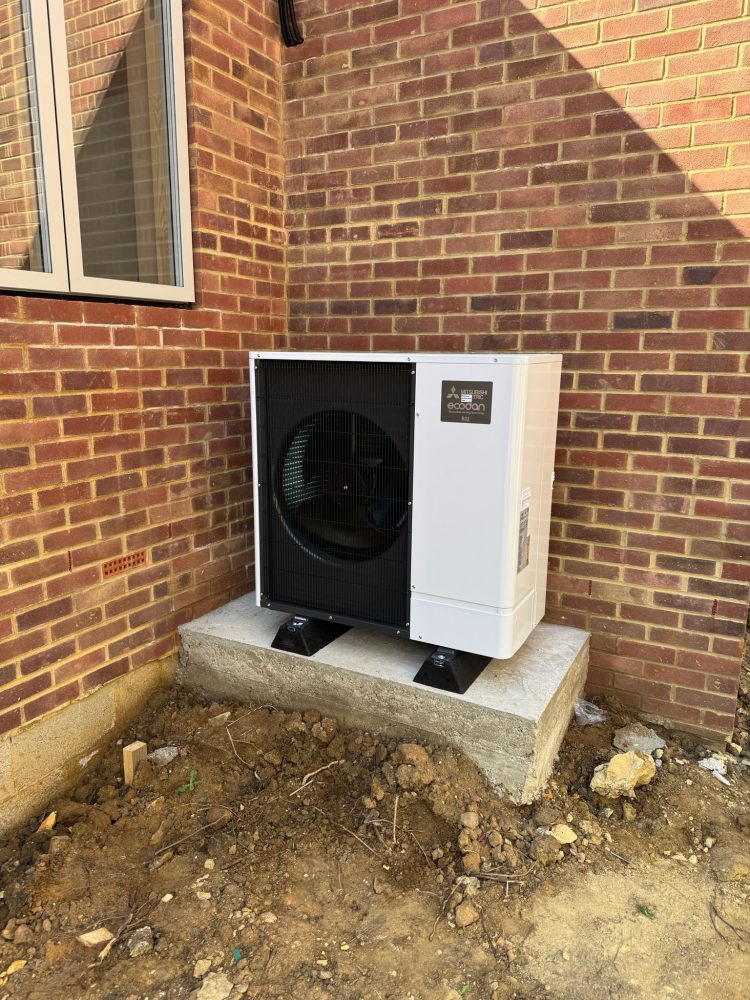
Yes. Modern air source heat pumps are designed to keep heating your home or small business through UK winter weather, including cold snaps. In places like Surrey and West Sussex, including Horley, Reigate, Redhill and Crawley, a well-designed and properly set-up heat pump should keep you comfortable without needing a boiler to “take over”.
This guide explains:
- What a heat pump is (and what it is not)
- What changes in cold weather
- What “efficiency” really means in winter
- How to tell if your property is suitable
- Radiators, underfloor heating, and “flow temperature”
- Hot water performance in winter
- Defrost cycles and what they look like day to day
- Common problems (and how to avoid them)
- What installation involves (time, disruption, access)
- Running costs, tariffs, and realistic expectations
- Maintenance, monitoring, and reliability
- What to do next if you are considering one
What is a heat pump, in plain English?
A heat pump is a heating system that moves heat from outside air into your building, then uses it to heat radiators or underfloor heating and to make hot water.
It is not a “free heat” machine, and it is not a direct replacement for a gas flame. It uses electricity to move heat, rather than making heat by burning fuel. The colder it gets outside, the harder it has to work, but it can still operate and produce useful heat.
How does an air source heat pump work in cold weather?
It helps to think of it like a fridge in reverse. A fridge pulls heat out of the inside and dumps it into your kitchen. A heat pump pulls heat out of the outside air and moves it into your home.
Even when it is cold, the air still contains heat energy. The heat pump can extract some of it and concentrate it to a higher temperature for your heating system. What changes in cold weather is:
- the heat pump has less available heat to grab from the air
- it needs to work harder to deliver the same indoor temperature
- it may need to run for longer, more steadily, rather than in short bursts
This is why setup and design matter more than brand names. A well-sized, well-commissioned system should feel stable and predictable in winter.
Will a heat pump keep my home warm in a UK cold snap?
In most properties, yes, if the system is designed properly for the building’s heat loss and your heating setup.
The key point is that a heat pump is usually designed to run for longer at lower temperatures, rather than heating the house quickly in short, high-heat blasts. If you are used to a boiler that fires up and blasts very hot water through radiators, the “feel” can be different.
What this means for you is:
- your rooms can still reach normal comfortable temperatures
- the system may run more hours per day in winter
- it often works best with steady heating rather than frequent on/off changes
A good survey should confirm what indoor temperatures are realistic at the coldest expected conditions for your area, including homes across Surrey and West Sussex.
What does “efficiency” mean, and why does it drop in the cold?
You will often see the term COP, which stands for “coefficient of performance”. In simple terms, COP is how many units of heat you get out for each unit of electricity you put in.
In colder weather, COP usually drops because the heat pump has to work harder. That is normal and expected.
What matters most is not a single headline number. It is:
- the efficiency across a winter day
- the temperatures your system runs at
- how well your home holds onto heat
- your electricity tariff and your household habits
A properly designed system can still be cost-effective in winter, but it is not magic. If your home loses heat quickly or the system is forced to run very hot water, costs can rise.
What makes a property suitable for a heat pump in winter?
Most UK homes can work with a heat pump, but some need upgrades to get good winter performance.
Start with heat loss. Heat loss is simply how quickly your building loses warmth through walls, loft, floors, windows, drafts, and ventilation. The higher the heat loss, the more heating power you need on cold days.
A quick practical checklist:
- Insulation: Is the loft insulated well? Are there obvious drafts?
- Windows and doors: Single glazing or very draughty frames can make winter performance harder.
- Radiator size: Smaller radiators may struggle at lower water temperatures.
- Space for the outdoor unit: You need a suitable spot with good airflow and sensible noise positioning.
- Hot water cylinder space: Many systems use a cylinder, so you need room for one if you do not already have it.
This is where a proper survey matters. JPEC Green Energy can assess heat loss, radiator sizing and your layout, and explain the trade-offs in plain English before you commit, including for properties around Horley, Reigate, Redhill and Crawley.
Do I need bigger radiators for a heat pump?
Sometimes, yes.
Heat pumps generally run at lower water temperatures than many boiler systems. The temperature of the water sent to your radiators is often called flow temperature (it is simply the temperature of the water leaving the heat pump and going into the heating system).
Lower flow temperatures can improve efficiency, especially in colder weather, but radiators may need to be larger to deliver the same room heat.
You do not always need to replace every radiator, but you may need to upgrade some rooms, especially:
- large living rooms
- cold north-facing rooms
- older extensions
- rooms with lots of glazing
Underfloor heating is naturally well suited because it can deliver comfortable heat at lower temperatures.
What about hot water in winter?
Heat pumps can provide hot water all year round. Most systems heat a hot water cylinder to a set temperature, usually on a schedule.
In winter, hot water performance depends on:
- cylinder size (how much hot water you need)
- how quickly you use hot water (one long shower versus several spread out)
- the temperature setpoints you choose
You may also hear about a “pasteurisation cycle” or “legionella cycle”. This is a periodic high-temperature heat cycle to reduce bacterial risk in stored hot water. It can be done in different ways depending on system design. Your installer should explain how it works on your system and what it means for electricity use.
What is a defrost cycle, and will I notice it?
In cold, damp weather, the outdoor unit can build up frost on the heat exchanger. A heat pump will periodically run a defrost cycle to clear it.
In plain terms, it briefly switches mode to melt the frost. During that time, heating output can pause for a short period. In a well-designed system, you should not feel big temperature swings indoors because:
- defrost cycles are usually short
- your home and heating system have some “thermal mass” (they hold heat for a while)
- the system design should account for winter conditions
You might notice:
- a brief plume of steam from the outdoor unit (this is usually normal)
- a change in fan noise
- water dripping from the unit as ice melts
If a system is undersized, poorly installed, or running very hot flow temperatures, defrosting can become more frequent and more noticeable. That is one reason commissioning (proper setup and testing) matters.
Common winter problems, and how to avoid them
Most heat pump complaints in cold weather come down to design, setup, or expectations rather than the basic technology.
Here are the issues we see most often:
- Undersized system: It cannot keep up on the coldest days.
- Flow temperature set too high: Comfort might improve, but efficiency drops and running costs rise.
- Radiators too small: Rooms never quite reach temperature in winter.
- Poor controls setup: Heating schedules and thermostats fight the system instead of helping it run steadily.
- Not enough insulation or draught control: The heat pump is trying to heat a “leaky bucket”.
- Bad outdoor unit location: Restricted airflow can reduce performance and make defrosting worse.
A professional survey and a careful handover reduce these risks. JPEC Green Energy can design the system around your property and how you actually live or work, which is especially important in mixed housing stock across Surrey and West Sussex.
What does installation involve, and how disruptive is it?
For most homes and small businesses, installation is manageable, but it is not “fit in an afternoon”.
Typical elements include:
- mounting the outdoor unit and running pipework
- installing or connecting to a hot water cylinder (if needed)
- connecting to your existing heating circuit, with flushing and inhibitor chemicals as required
- electrical works and safety checks
- setting up controls and commissioning (final setup, testing, and balancing)
Disruption depends on your starting point. If you already have a cylinder and accessible pipe routes, it is often straightforward. If you need a new cylinder location or major radiator changes, it can take longer.
A good installer will talk you through access, noise considerations, condensate drainage, and what will be switched off and when. They should also explain what to expect on the first cold week, so you are not left guessing.
Are heat pumps expensive to run in winter?
They can be very reasonable to run, but it depends on your home, your settings, and your electricity price.
Two practical points matter most:
- Heat loss: A draughty, poorly insulated building needs more heat. More heat means more electricity, whatever the heating system is.
- Flow temperature and control strategy: Running cooler, steadier heating often costs less than trying to “blast” heat in short bursts.
If you are comparing to gas, remember you are comparing two different fuels with different prices. Heat pumps can reduce running costs in some homes, but not all, especially if the home needs upgrades or if electricity prices are high.
If you want a realistic estimate, you need a site-specific design and a discussion about how you use the building (for example, a family out during the day in Reigate versus someone working from home in Horley, or a small business with daytime heating needs in Crawley). That context changes the numbers.
Do heat pumps need a backup heater for very cold days?
Not always. Many UK installations do not need a separate backup heat source.
Some systems include an electric immersion heater or backup element that can assist in certain situations, such as:
- unusual cold snaps
- hot water high-temperature cycles
- system faults or recovery
The goal is not to rely on backup as a normal part of heating. If backup is running often, it usually points to a design or setup issue that should be addressed.
What maintenance is needed, and are they reliable?
A heat pump should be maintained, but it is not high-maintenance.
In general, you should expect:
- periodic checks to keep it operating safely and efficiently
- cleaning and inspection of the outdoor unit area (keeping airflow clear)
- checks of system pressure, glycol (if used), and water quality where relevant
- control and sensor checks during servicing
Reliability depends heavily on installation quality and commissioning. The best equipment can perform poorly if it is installed badly.
Warranties vary by manufacturer and installer, so you should ask what is included, what servicing is required to maintain the warranty, and what support looks like if something goes wrong.
Practical tips before you commit
If you are considering a heat pump, especially for winter comfort, these steps help you avoid disappointment:
- Improve loft insulation and reduce obvious drafts first if they are poor.
- Ask for a heat loss calculation, not a “rule of thumb” guess.
- Ask what flow temperature the system is designed to run at on the coldest day.
- Check whether any radiators need upgrading and why.
- Ask how the installer will set up controls for steady winter running.
- Make sure the outdoor unit location is planned for airflow, noise, and drainage.
JPEC Green Energy can survey, design, install and commission heat pumps locally across Surrey and West Sussex, and explain the pros, cons and likely winter performance in straightforward terms, so you can make a confident decision.
JPEC Green Energy can help
If you are in Horley, Reigate, Redhill, Crawley, or elsewhere in Surrey and West Sussex, JPEC Green Energy can help you work out whether a heat pump makes sense for your property and how it will perform in real winter conditions. We can survey your home or premises, design the system properly, install and commission it, and talk you through the trade-offs, disruption, and expected running costs based on how you actually use the building.
To get started, get in touch for a survey and a proper quote based on your property and usage: 0800 955 2821 and renewables@jpecgroup.co.uk.
This article is general information, not personal advice. Heat pump suitability, performance and running costs vary by building fabric, existing heating system, controls, and energy tariffs, so you should confirm recommendations through a site survey and system design for your specific property.