
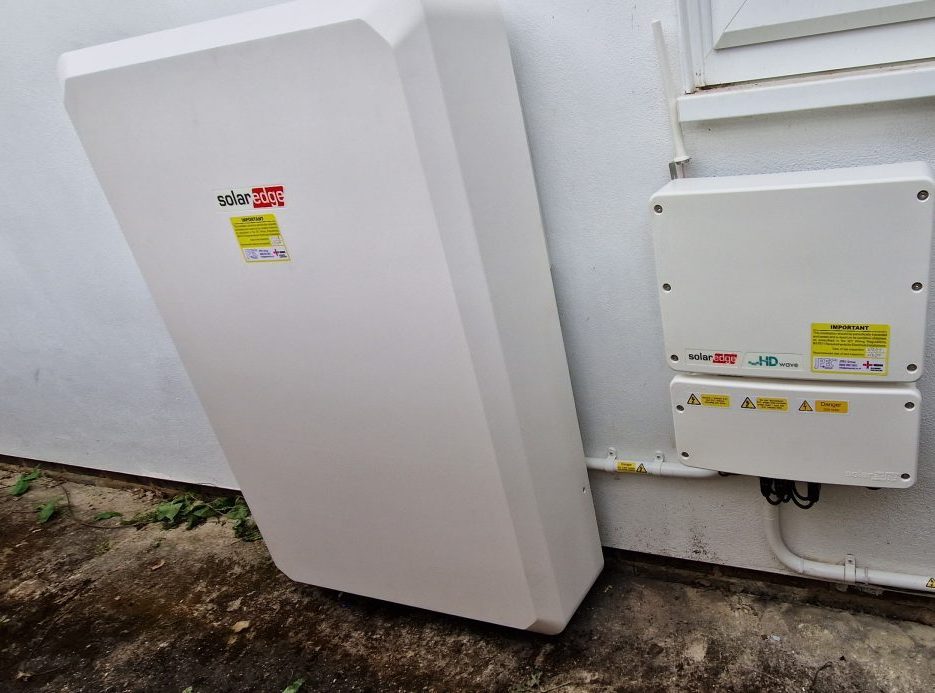
How do batteries change exporting electricity back to the grid?
Adding a battery changes exporting by storing your surplus solar electricity instead of sending it straight to the grid. In simple terms, you keep more of what you generate and export less.
For homeowners and small businesses in Horley, Reigate, Redhill, Crawley and across Surrey and West Sussex, this can mean higher self use, lower electricity bills, and different export payments. Whether it is worth it depends on your usage patterns, tariff, and system design.
This guide explains what a solar battery does, how exporting works without one, what changes when you add one, how payments are affected, suitability, pros and cons, approvals, installation, common mistakes, and practical next steps.
What is a solar battery?
A solar battery stores excess electricity generated by your solar panels so you can use it later. It does not generate electricity itself and does not automatically take you off grid.
Without a battery, surplus power is exported. With a battery, surplus power charges the battery first and is used later, usually in the evening.
How does exporting work without a battery?
Your home uses solar electricity first. Any excess flows through your smart meter and into the grid.
You are usually paid through the Smart Export Guarantee, known as SEG, which requires suppliers to pay for each kilowatt-hour exported. Rates vary by supplier.
What changes when you add a battery?
The system priority typically becomes: power your home, charge the battery, then export any remaining surplus.
This reduces exports and increases self consumption, meaning you use more of your own solar generation.
How do batteries affect export payments?
A battery usually reduces SEG payments because you export less electricity.
However, the electricity you avoid buying from the grid is often worth more than export payments, depending on your tariff and usage.
Is your property suitable for a battery?
You are more likely to benefit if you are out during the day and use more electricity in the evening, or if your import tariff is relatively high.
Properties that already use most solar generation during daylight hours may see smaller benefits.
What are the pros and cons?
Pros include higher self use, lower grid imports, and optional backup capability if designed for it.
Cons include upfront cost, limited lifespan, reduced export payments, and additional installation space requirements.
What approvals or technical limits apply?
Your installer must notify or apply to the local Distribution Network Operator, known as the DNO, which manages the electricity network.
Export limits may apply in some areas. Modern systems often use a hybrid inverter, which manages both solar panels and the battery together.
What does installation involve?
Installation usually includes a site survey, system design, DNO checks, battery installation, testing, and commissioning.
Most domestic installations take around one day, with limited disruption beyond electrical work.
What happens if the power goes out?
Most battery systems do not automatically power your home during a power cut unless specific backup equipment is installed.
Backup capability must be designed in advance and adds cost.
Common mistakes and misunderstandings
Batteries do not eliminate exports entirely, especially in summer when generation is high.
Savings depend heavily on usage patterns and tariffs. Correct sizing is important to ensure good value.
Practical tips before you commit
Review your electricity bills, understand when you use most power, compare tariffs, and ask for projections based on your real usage data.
Local installers familiar with properties in Surrey and West Sussex can provide more accurate assessments.
JPEC Green Energy can help
JPEC Green Energy serve Horley, Reigate, Redhill, Crawley and the wider Surrey and West Sussex area.
They can survey your property, analyse usage, design a compliant system, manage DNO notifications, install and commission the equipment, and explain expected performance in clear terms.
For a tailored survey and quotation, contact JPEC Green Energy at 0800 955 2821 and renewables@jpecgroup.co.uk.
This document is general information only and not personal advice. Savings and performance depend on property details, tariffs, usage patterns and system design. Always confirm recommendations through a proper survey and proposal.