
Do I need solar panels to have a battery in the UK
No, you do not need a battery for solar panels in the UK. Many homes run solar perfectly well without one. A battery can improve how much of your own electricity you use, but it adds cost and is not always worth it. In areas like Surrey and West Sussex, including Horley, Reigate, Redhill and Crawley, both solar-only and solar-plus-battery systems are common, depending on how the property uses electricity.
In this guide, we will explain when a battery makes sense, when it does not, and how to decide what is right for your home or business.
We will cover:
- What a solar battery actually does
- How solar panels work without a battery
- How much difference a battery makes
- When a battery is worth considering
- When it may not be worth it
- Costs and payback in simple terms
- Installation and practical considerations
- Common mistakes and misunderstandings
- Practical tips before you commit
- When a professional design is essential
What is a solar battery?
A solar battery stores electricity generated by your solar panels so you can use it later.
Without a battery, any unused solar electricity is exported to the grid. With a battery, some of that energy is stored for use later in the day.
In simple terms:
- Solar panels generate electricity during the day
- Your home uses what it needs at that time
- Any excess can be stored in a battery instead of exported
The most common type is a lithium-ion battery, similar to what is used in electric vehicles, but designed for home energy storage.
How do solar panels work without a battery?
Solar panels work perfectly well without a battery.
During the day:
- Your home uses solar electricity first
- Any extra electricity is exported to the grid
At night:
- You import electricity from the grid as normal
You can still earn money for exported electricity through the Smart Export Guarantee, known as SEG. This is a scheme that pays you for energy you send back to the grid.
Many homes in Crawley, Reigate and across Surrey run solar-only systems successfully and still reduce their energy bills.
How much difference does a battery make?
A battery increases how much of your own solar electricity you use, often called self-consumption.
Without a battery, a typical home might use:
- Around 30 to 50 percent of its solar electricity directly
With a battery, this might increase to:
- -Around 60 to 80 percent
These figures are illustrative and depend on your usage pattern and system size.
What this means for you is that a battery can reduce how much electricity you buy from the grid, especially in the evening.
However, it does not increase how much electricity your panels generate. It only changes when you use it.
When is a battery worth considering?
A battery may be worth considering if you:
- Are out during the day and use more electricity in the evening
- Have higher electricity costs and want to reduce grid usage
- Want more control over your energy use
- Plan to add an electric vehicle or heat pump
- Prefer storing your energy rather than exporting it
For example, a working household in Horley that is empty during the day may benefit more from a battery than someone at home all day.
JPEC Green Energy can assess your usage and explain whether a battery is likely to add value in your situation.
When might a battery not be worth it?
A battery is not always the best investment.
It may be less worthwhile if:
- You already use most of your electricity during the day
- Your export tariff pays a good rate for exported energy
- Your electricity usage is relatively low
- You want the simplest and lowest-cost system
For example, a small business in Redhill with strong daytime electricity demand may use most of its solar power directly, making a battery less necessary.
In many cases, starting with solar panels alone and adding a battery later is a sensible approach.
How do costs and payback compare?
Adding a battery increases the upfront cost of a solar system.
Typical considerations:
- A battery can add several thousand pounds to a system
- Savings depend on how much stored electricity you use
- Payback is often longer than solar panels alone
Solar panels usually offer the strongest financial return first. A battery is more about improving usage and flexibility.
Payback depends on:
- Your electricity tariff
- Your export rate under SEG
- Your usage pattern
- System design
These figures vary widely, so a tailored estimate is important.
What does installation involve?
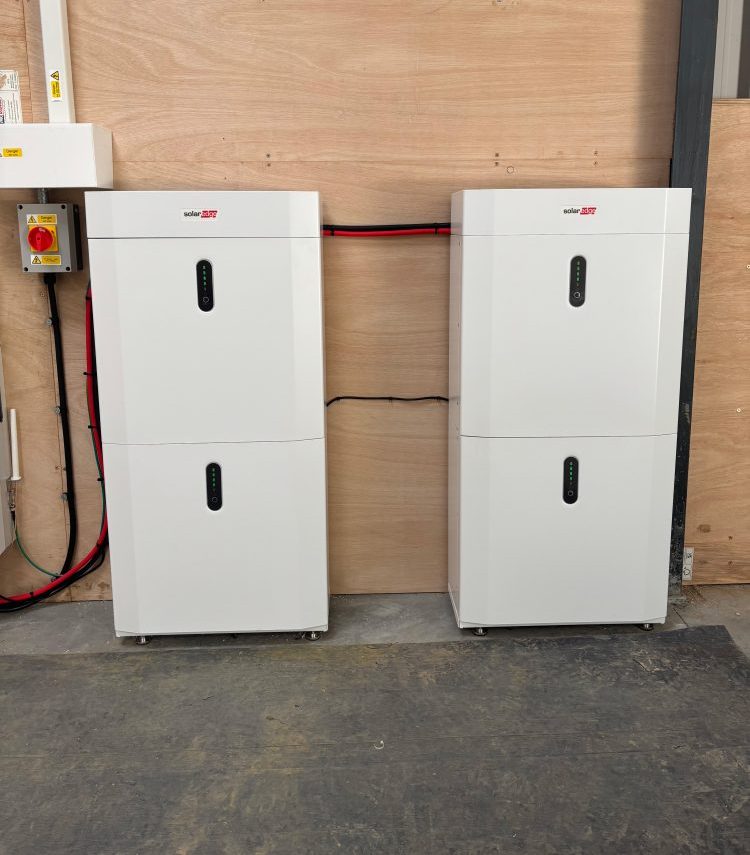
A battery is usually installed alongside the solar system or added later.
Typical setup includes:
- A battery unit mounted on a wall or floor
- Connection to your inverter, which converts solar electricity into usable power
- Integration with your home’s electrical system
Some systems use a hybrid inverter, which means an inverter designed to work with both solar panels and batteries.
Installation is usually completed within a day alongside solar, or as a short additional visit if retrofitted.
JPEC Green Energy can design and install both solar and battery systems, ensuring they work together safely and efficiently.
What happens if the power goes out?
Most standard solar and battery systems do not provide backup power during a power cut.
This is because they automatically shut down to protect engineers working on the grid.
Some systems can include backup functionality, but this requires:
- Additional equipment
- Specific system design
- Higher cost
If backup power is important to you, this should be discussed at the design stage.
What maintenance and lifespan should you expect?
Solar batteries require very little maintenance.
Typical expectations include:
- Battery lifespan of around 10 to 15 years
- Gradual reduction in capacity over time
- Monitoring via an app or online system
Most systems come with warranties that guarantee performance over a set number of years or cycles.
As with solar panels, proper installation and commissioning are key to reliability.
Common mistakes and misunderstandings
Some common misunderstandings include:
- Thinking a battery is required for solar
- Expecting a battery to eliminate electricity bills entirely
- Overestimating savings without considering usage patterns
- Installing a battery that is too large or too small
- Not checking export tariffs before deciding
A battery should be chosen based on how you use energy, not just added as an upgrade.
Practical tips before you commit
Before deciding whether to include a battery, consider:
- When you use most of your electricity
- Your current energy tariff and export rates
- Your budget and priorities
- Whether you may add a battery later
- Future plans such as EV charging or heating upgrades
For example, a household in Crawley with evening-heavy usage may benefit more from storage than one with consistent daytime use.
JPEC Green Energy can review your usage and explain clearly whether a battery is likely to improve your system.
When is a professional design essential?
A proper design is important for both solar and battery systems.
This should include:
- System sizing based on your energy use
- Battery capacity matched to your usage pattern
- Expected generation and savings
- Electrical compatibility and safety checks
JPEC Green Energy are experienced local installers who can survey your property, design your system properly, and explain the trade-offs in plain English.
So do you need a battery with solar panels?
No, you do not need a battery for solar panels in the UK.
Solar panels on their own can already reduce your electricity bills significantly.
A battery can improve how you use your energy and reduce reliance on the grid, but it is not essential and is not always the best financial choice.
The right decision depends on your usage, your budget and your long-term plans.
JPEC Green Energy can help
If you are considering solar panels in Surrey or West Sussex, including Horley, Reigate, Redhill or Crawley, JPEC Green Energy can help you decide whether a battery is right for your system.
They can carry out a detailed survey, design a system based on your usage and property, install and commission it properly, and explain expected performance and trade-offs in clear, practical terms.
To get tailored advice and a detailed quote, contact JPEC Green Energy.
This article is general information only and not personal advice. Solar and battery recommendations should always be confirmed through a professional survey and system design based on your specific property, energy usage and local network conditions.