
Do heat pumps save money in the UK?
The short answer is yes, heat pumps can save you money in the UK, but only in the right property with the right setup. In many homes across Surrey and West Sussex, they reduce running costs over time, but in others they may cost more to run than a gas boiler if not properly designed.
In this guide, we will explain when heat pumps save money, when they do not, and what you need to look at before making a decision.
We will cover:
- What a heat pump is and how it works
- Why savings vary so much in the UK
- When heat pumps are cheaper to run
- When they may cost more
- Is your property suitable?
- Typical running costs compared to gas
- What affects performance and efficiency
- What installation involves
- What grants and support are available
- Common mistakes and how to avoid them
- What maintenance is needed
What is a heat pump and how does it work?
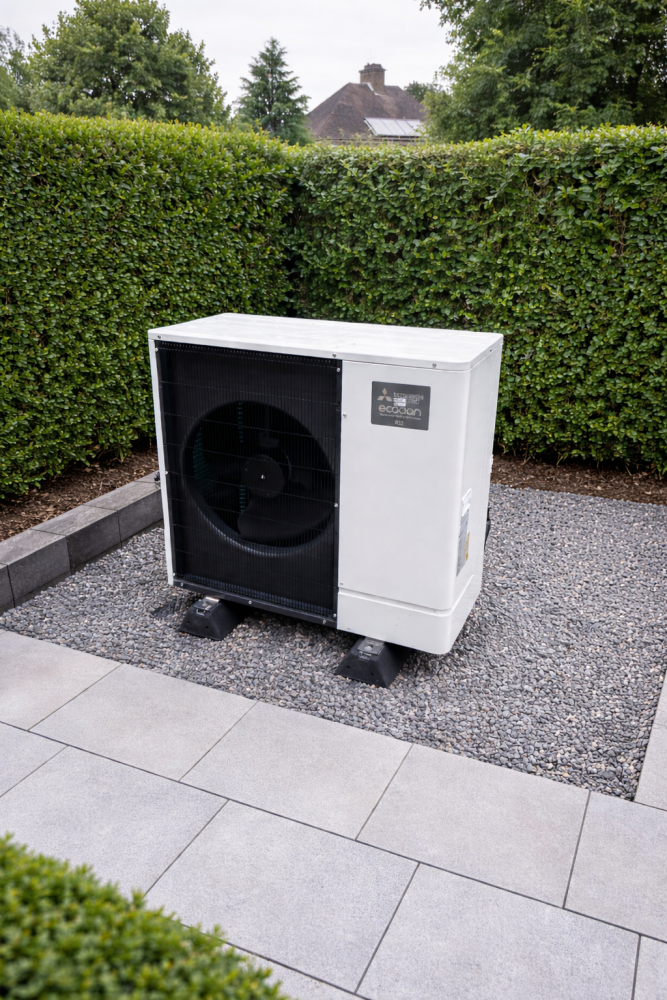
A heat pump is a low carbon heating system that moves heat from outside into your home, rather than creating heat by burning fuel.
It works a bit like a fridge in reverse. It extracts heat from the air or ground and upgrades it to a usable temperature for your heating and hot water.
A key term you may hear is COP, which stands for coefficient of performance. This simply means how much heat you get for each unit of electricity used. For example, a COP of 3 means you get three units of heat for every one unit of electricity.
Why do savings vary so much in the UK?
Heat pumps can be efficient, but electricity is usually more expensive than gas per unit in the UK. This is why results vary.
Your running costs depend on:
- How efficient the system is in your home
- How well your home holds heat
- Your electricity tariff
- Your current heating system
For example, a well-insulated home in Crawley or Redhill may see clear savings, while an older, draughty property in Reigate may not without upgrades.
When are heat pumps cheaper to run?
Heat pumps tend to save money when your home is suited to low temperature heating and the system is designed properly.
They are more likely to be cost-effective if:
- Your home is well insulated
- You have underfloor heating or large radiators
- You are replacing electric heating, oil, or LPG
- You use a smart or off-peak electricity tariff
In these cases, the efficiency of the heat pump can outweigh the higher electricity price.
When might they cost more to run?
Heat pumps can cost more to run if the system struggles to operate efficiently.
This can happen if:
- The property loses heat quickly
- Radiators are too small
- Flow temperatures are set too high
- The system is poorly designed or installed
For example, a poorly insulated older home in Horley without upgrades may end up using more electricity than expected.
This is why design matters just as much as the technology itself.
Is your property suitable for a heat pump?
Suitability depends on your home, not just your budget.
Key factors include:
- Insulation levels (loft, walls, windows)
- Available space for the outdoor unit
- Existing heating system and pipework
- Hot water cylinder space
A newer home in Surrey with good insulation is usually a strong candidate. Older homes in West Sussex can still work well, but often need improvements first.
JPEC Green Energy can assess your property and explain clearly what upgrades, if any, are needed before a heat pump will perform properly.
How do running costs compare to gas?
Running costs vary, but the comparison usually comes down to efficiency versus fuel price.
As a rough illustration:
- Gas boilers are less efficient but use cheaper fuel
- Heat pumps are more efficient but use more expensive electricity
If your heat pump runs efficiently, it can match or beat gas costs. If it does not, it may be more expensive.
For example, a family in Crawley using a well-designed system and a good tariff may see stable or lower bills, while another household with poor insulation may not.
Results always depend on your setup, usage, and tariff.
What affects performance and efficiency?
Performance is influenced by several practical factors.
- Insulation quality
- Radiator size and heat distribution
- Flow temperature (the temperature of water circulating in your system)
- Outdoor temperature
- System design and controls
Heat pumps work best at lower flow temperatures. This often means running heating for longer periods at a steady level, rather than short bursts of high heat.
Getting this right is key to both comfort and cost.
What does installation involve?
Installing a heat pump is more involved than replacing a boiler, but it is manageable with the right planning.
Typical steps include:
- Home survey and heat loss calculation
- System design and sizing
- Upgrading radiators if needed
- Installing the outdoor unit
- Installing or upgrading a hot water cylinder
- Commissioning and testing
Installation can take several days to over a week depending on the property.
In homes across Redhill, Reigate, or Horley, some disruption is expected, especially if internal upgrades are required.
Working with experienced installers like JPEC Green Energy helps ensure the system is designed and installed correctly from the start.
What grants and support are available?
There is financial support available to help reduce upfront costs.
The main scheme is:
– Boiler Upgrade Scheme (BUS), which offers up to £7,500 towards a heat pump
There may also be additional local support in parts of Surrey and West Sussex, depending on your circumstances.
Grants reduce installation cost, which improves the overall financial case, even if running cost savings are modest.
Common mistakes and how to avoid them
Heat pumps work well when done properly, but there are common pitfalls.
- Skipping insulation improvements
- Installing without proper design calculations
- Expecting it to behave like a gas boiler
- Choosing based on price rather than quality
The most important step is a proper survey and design process.
JPEC Green Energy can explain the trade-offs clearly and help avoid these issues before installation begins.
What maintenance is needed?
Heat pumps are generally low maintenance but still require care.
You should expect:
- Annual servicing
- Occasional system checks
- Monitoring performance
Most systems come with warranties, and regular servicing helps maintain efficiency and lifespan.
JPEC Green Energy can help
If you are considering a heat pump, the key question is not just whether they save money, but whether they will work well in your property.
JPEC Green Energy are experienced local installers working across Horley, Reigate, Redhill, Crawley, Surrey, and West Sussex. They can assess your home, explain expected running costs in plain English, and design a system that fits your needs.
They handle the full process from survey and design through to installation and commissioning, helping ensure your system performs as expected.
This guide is for general information only and is not personal advice. Costs, savings, and suitability will vary depending on your property, usage, and system design. Always confirm recommendations through a proper survey and design based on your specific needs.