UK approves biggest solar farm – what does it mean for your home or business?
The short answer is that the UK approving a solar farm the size of around 1,700 football fields shows solar energy is becoming a major part of the national grid, but it does not directly reduce your bills unless you install your own system. What it does mean is that solar is now proven, scalable, and here to stay across areas like Surrey and West Sussex.
In this guide, we will explain what this announcement actually means, how large solar farms differ from home systems, and what it means if you are considering solar panels.
We will cover:
- What this large solar farm actually is
- Why the UK is building projects at this scale
- How solar farms differ from home solar systems
- What this means for electricity prices
- Is solar now a safer investment for homeowners?
- Is your property suitable for solar panels?
- How much energy a home system can generate
- What approvals or paperwork are involved
- What installation involves
- Common mistakes and how to avoid them
- What maintenance is needed
What is this solar farm and why is it so large?
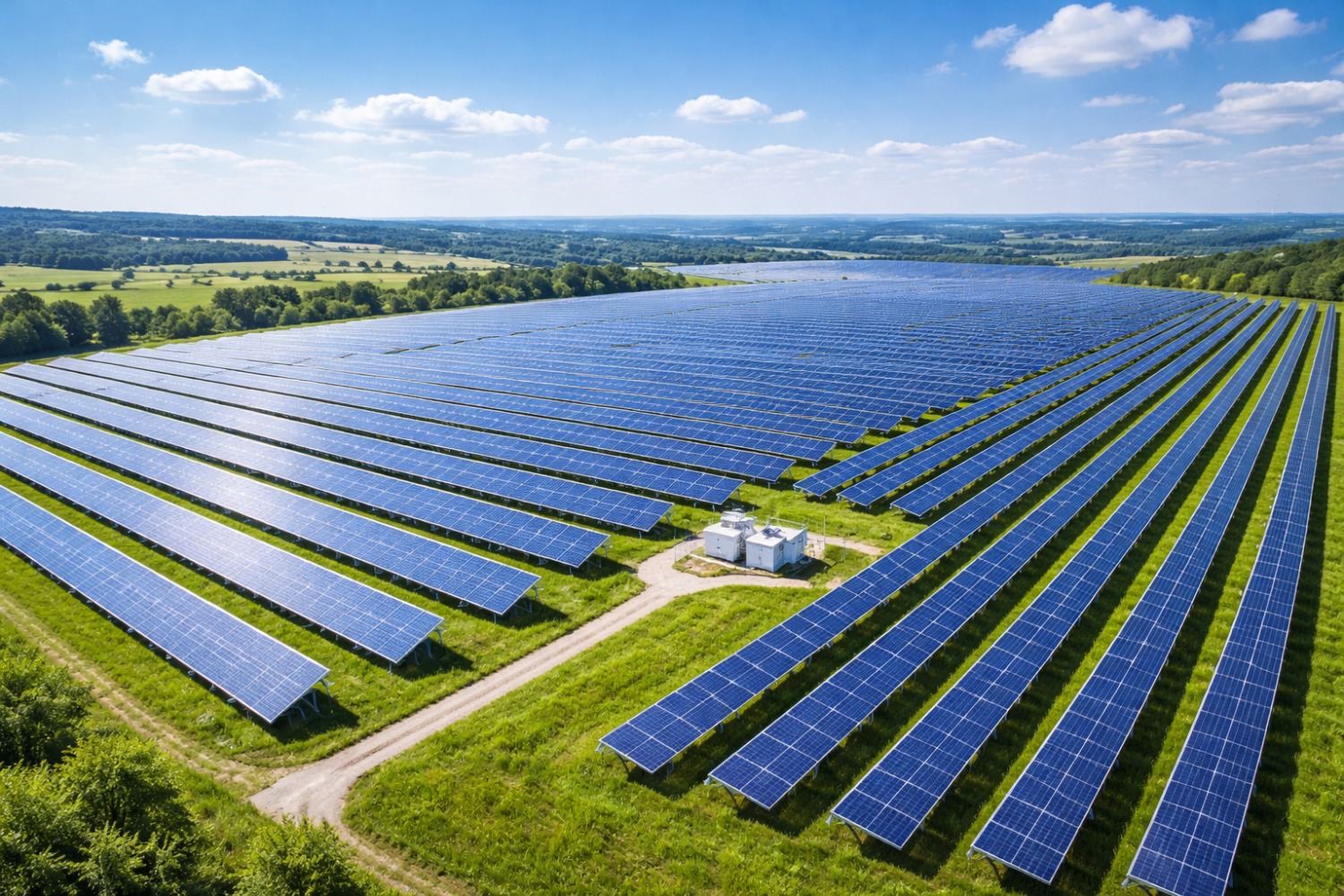
The approved solar farm is a large-scale energy project designed to generate electricity for the national grid, not for individual homes.
At the size of roughly 1,700 football fields, it is one of the biggest solar developments in the UK. Projects like this are built to supply power to tens of thousands of homes, in this case around 180,000.
What this means for you is that solar is no longer a small or experimental technology. It is now being used at scale to support the country’s energy needs.
Why is the UK building solar farms at this scale?
The UK is expanding solar capacity to reduce reliance on fossil fuels and improve energy security.
Large solar farms help:
- Increase renewable energy supply
- Reduce exposure to volatile gas prices
- Support long-term energy stability
For homeowners and businesses in places like Crawley, Redhill, and Reigate, this reflects a wider shift in how electricity is generated across the country.
How are solar farms different from home solar systems?
Solar farms and home solar panels both use the same technology, but they serve very different purposes.
Solar farms:
- Feed electricity directly into the grid
- Supply large numbers of homes indirectly
- Are centrally managed and maintained
Home solar systems:
- Generate electricity for your own use first
- Reduce your personal electricity bills
- Can export excess energy through the SEG (Smart Export Guarantee, a scheme that pays you for surplus electricity)
What this means is that even though large solar farms are growing, they do not replace the benefit of having your own system.
Does this mean electricity bills will go down?
Not directly, at least not in the short term.
Large solar projects help stabilise energy supply, but your electricity price still depends on:
- Market energy costs
- Supplier pricing
- Government policy
Over time, more renewable energy can help reduce reliance on expensive fuels, but installing your own solar system is still the most direct way to lower your bills.
Is solar now a safer investment for homeowners?
Yes, large-scale investment in solar makes it a more stable and proven option.
The fact that the UK is approving projects of this size shows:
- Long-term confidence in solar technology
- Continued support for renewable energy
- Ongoing improvements in efficiency and cost
For a homeowner in Horley or a business in Crawley, this reduces the risk of investing in solar compared to ten or fifteen years ago.
Is your property suitable for solar panels?
Suitability depends on your roof and surroundings, not the national rollout.
Key factors include:
- Roof direction (south is best, but east and west can still work well)
- Shading from trees or nearby buildings
- Available roof space
- Structural condition
For example, a clear roof in Redhill or Crawley is likely to perform well, while a shaded property in parts of Reigate may need careful design.
JPEC Green Energy can assess your property and explain clearly what level of performance you can expect.
How much energy can a home system generate?
A typical UK home system might be around 3 to 5 kWp.
kWp stands for kilowatt peak, which means the maximum output under ideal conditions.
As a rough guide:
- A 4 kWp system might generate around 3,000 to 4,000 kWh per year
- This can cover a large portion of a typical household’s electricity use
Results vary depending on location, roof conditions, and how you use electricity during the day.
What approvals or paperwork are involved?
Most solar installations are straightforward from a permissions point of view.
You will usually need:
- DNO approval, which is permission from your local electricity network operator to connect your system
- Compliance with building regulations
Planning permission is often not required for standard installations.
An experienced installer like JPEC Green Energy will handle this process for you.
What does installation involve?
Installing solar panels is usually quick and minimally disruptive.
Typical steps include:
- Setting up scaffolding
- Mounting panels to your roof
- Installing an inverter (this converts solar energy into usable electricity)
- Connecting and testing the system
Most installations take one to three days.
Homes across Surrey and West Sussex, including Horley and Redhill, can usually remain occupied during installation.
Common mistakes and how to avoid them
Even though solar is now widely proven, there are still common pitfalls.
- Choosing a system size without considering your usage
- Ignoring shading or roof layout
- Expecting immediate large savings without changing habits
- Focusing only on price rather than design quality
The key is to design the system around your property and how you use electricity.
JPEC Green Energy can explain these trade-offs in plain English before you commit.
What maintenance is needed?
Solar panels are low maintenance, but some upkeep is still needed.
You should expect:
- Occasional visual checks
- Monitoring system performance
- Inverter replacement after around 10 to 15 years in many cases
Most panels come with long warranties, often 20 to 25 years.
JPEC Green Energy can help
If you are thinking about solar, the approval of large solar farms is a strong signal that the technology is reliable, but the key question is how it works on your property.
JPEC Green Energy are experienced local installers working across Horley, Reigate, Redhill, Crawley, Surrey, and West Sussex. They can assess your roof, explain expected performance in plain English, and design a system that fits your needs.
They handle everything from survey and design through to installation and commissioning, helping ensure your system performs as expected.
This guide is for general information only and is not personal advice. Performance, costs, and suitability will vary depending on your property, usage, and system design. Always confirm recommendations through a professional survey and system design tailored to your needs.