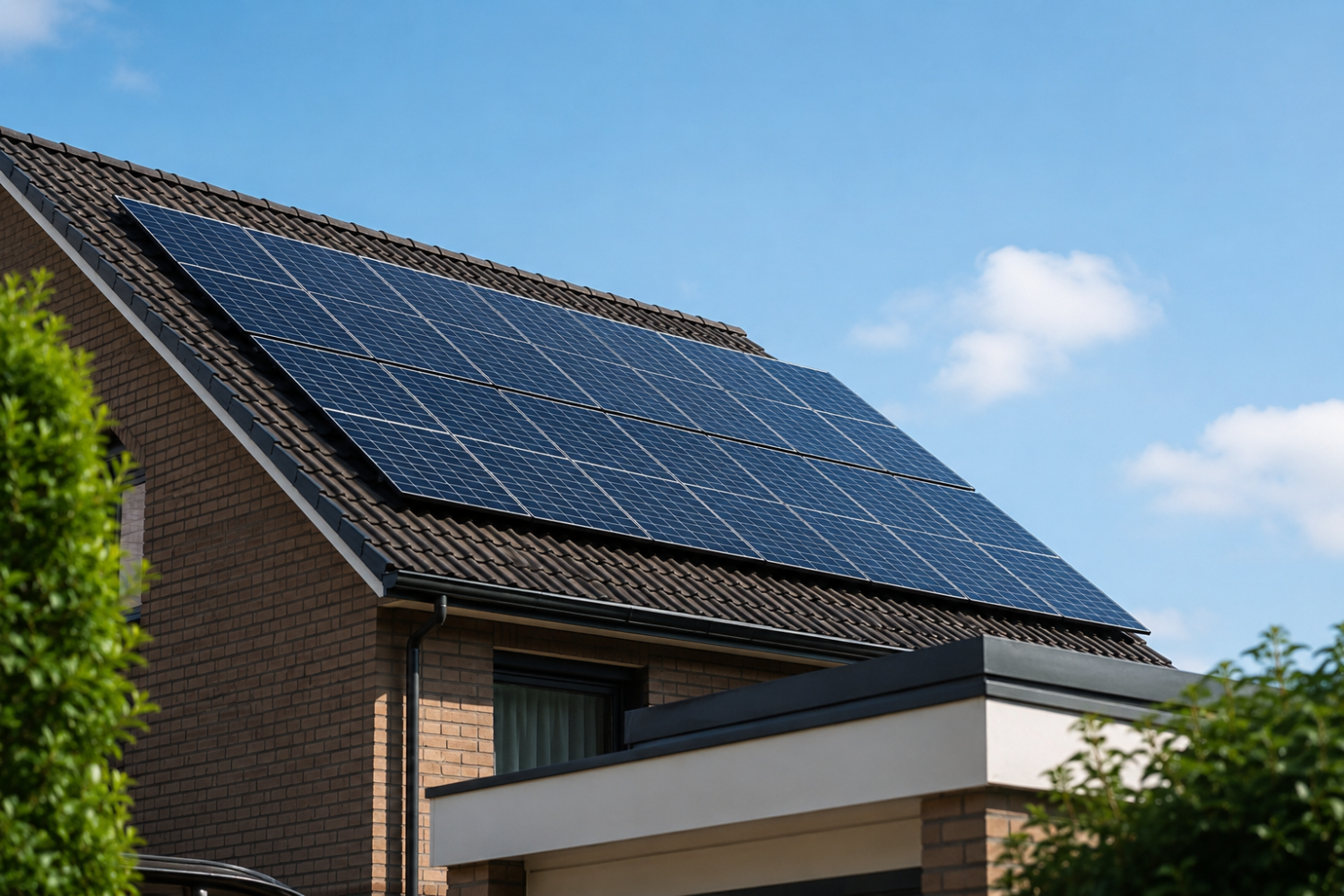
Some lower-income households could receive fully funded home energy upgrades worth around £9,000 to £12,000, which may include solar panels, batteries, heat pumps, insulation or draught proofing. This is part of the wider Warm Homes Plan and proposed Energy Independence Bill, not a simple cash grant that every household in Horley, Reigate, Redhill, Crawley, Surrey or West Sussex can automatically claim.
This guide explains what has been announced, who is likely to qualify, what support may be available for higher-income households, and what solar panels, batteries and heat pumps could realistically mean for your home.
- What has the Government announced?
2. What is the Warm Homes Plan?
3. Who could get a £9,000 to £12,000 grant?
4. What help is planned for mid-to-higher income homes?
5. What could solar panels and batteries save?
6. What about renters and people in flats?
7. How do heat pumps fit into the plan?
8. What are the wider energy bill changes?
9. Is your property suitable?
10. What does installation involve?
11. Common mistakes to avoid
12. JPEC Green Energy can help
What has the Government announced?
The Government has set out a major home energy programme through the Warm Homes Plan, with public investment intended to help households install measures such as solar panels, batteries, insulation and heat pumps.
The article this guide is based on focuses on a new Energy Independence Bill announced as part of the King’s Speech. According to that report, households will be supported through around £15bn in grants and loans, with the goal of lowering bills and improving the UK’s energy resilience.
A new Warm Homes Agency is also expected to oversee the rollout. Its role would be to help coordinate the large-scale move towards solar panels, batteries, heat pumps, insulation and other home energy upgrades over the coming years.
For homeowners in Surrey and West Sussex, the practical point is simple: more support is expected, but the exact route will depend on your income, property type, location, local rollout and whether the measure is suitable for your home.
What is the Warm Homes Plan?
The Warm Homes Plan is a Government programme designed to help people improve their homes so they use less energy, rely less on fossil fuels and have more control over bills. It includes direct support for low-income and fuel-poor households, plus wider finance options for households that do not qualify for free upgrades.
The plan can cover several types of improvement, including:
- Solar panels
- Battery storage
- Heat pumps
- Insulation
- Draught proofing
- Smart heating controls
- Other energy-saving improvements where suitable
This matters because the “£12,000 solar panel grant” headline can be slightly misleading. The support may include solar panels, but the package is meant to be tailored to the property. For one home, solar panels and a battery may be the right answer. For another, insulation or heating upgrades may be more important.
Who could get a £9,000 to £12,000 grant?
The grant support is expected to be aimed mainly at low-income households. Based on the article, households with a total income of around £35,000 or less could receive a grant package worth roughly £9,000 to £12,000.
This does not mean every household under that income level will automatically get solar panels. Eligibility is likely to depend on the final scheme rules and local delivery, as well as whether the property is suitable.
You are more likely to be in the target group if:
- Your household income is around £35,000 or below
- Your home has poor energy efficiency
- You are in fuel poverty or at risk of high energy costs
- Your home is suitable for the proposed measures
- Your council or local delivery body has funding available
In practice, someone in Redhill with an older, poorly insulated home may be offered a different package from someone in Crawley with a suitable roof and high electricity use. That is why a proper survey matters.
What help is planned for mid-to-higher income homes?
The plan is not only about free grants. Around £2bn of Government funding is expected to back no and low-interest loans for higher-income households who want to install heat pumps, solar panels and batteries.
This is important for homeowners in places such as Reigate, Horley and across Surrey and West Sussex who may not qualify for a free upgrade, but still want to cut bills and reduce reliance on gas or grid electricity.
For these households, the question is not “Can I get it free?” but “Does the system make financial and practical sense for my property?” That depends on your roof, energy use, tariff, heating setup, future plans and how long you expect to stay in the property.
A loan can make improvements more accessible, but it still needs careful thought. You should compare the expected bill savings with the repayment cost, maintenance needs and system lifespan.
What could solar panels and batteries save?
The article says the Department for Energy Security and Net Zero has estimated that an owner-occupied three-bed mid-terrace house with solar panels and a battery could save around £450 a year on energy bills.
That figure is useful, but it should not be treated as a guarantee. Solar savings vary depending on:
- Roof direction and shading
- System size
- Battery size
- Electricity use during the day and evening
- Export tariff
- Import tariff
- Whether you have an EV charger or heat pump
- How well the system is designed
A family in Horley that is out all day may benefit from a battery because it stores daytime solar power for evening use. A small business in Crawley with steady daytime electricity use may use more of the solar power as it is generated, which can improve the case for solar.
Solar panels can reduce your electricity bills, but they do not usually remove them completely. Most homes still need grid electricity, especially in winter and at night.
What about renters and people in flats?
The article also mentions planned changes to allow renters and people living in flats to buy plug-in solar panels, with estimated savings of around £110 a year.
This is a different idea from a full rooftop solar installation. Plug-in solar usually means smaller panels that can be connected more simply, often for balconies or flats. It may help some households generate a modest amount of electricity, but it will not perform like a full roof-mounted solar PV system.
There are still practical questions to consider, especially for flats and rented homes. You may need permission from your landlord, freeholder, managing agent or building owner. There may also be safety, insurance, metering and installation rules to follow.
If you rent in Reigate, Redhill or Crawley, do not assume you can install equipment without permission. Check the rules first.
How do heat pumps fit into the plan?
Heat pumps are another major part of the Warm Homes Plan. A heat pump uses electricity to move heat into your home, rather than burning gas like a boiler. The most common type is an air source heat pump, which takes heat from the outside air.
The article says heat pumps often attract concern because the upfront installation cost can be much higher than a gas boiler, commonly around £11,000. It also notes that homeowners can apply for a grant of up to around £7,500 under the Boiler Upgrade Scheme.
The same article says officials have estimated that a three-bed detached house with solar panels and a heat pump could save around £550 a year.
Again, that will vary. Heat pumps work best in homes that can keep heat in and run efficiently at lower heating temperatures. That means insulation, radiator sizing and hot water setup all matter.
JPEC Green Energy can help explain whether solar panels, battery storage, a heat pump, or a combination of measures is likely to be suitable for your home.
What are the wider energy bill changes?
The article is not only about grants. It also describes wider energy market changes designed to help households use cheaper electricity when renewable generation is high.
One idea is to offer discounted electricity at times when there is excess power on the grid, such as sunny or windy periods. This could help households shift usage to cheaper times, for example by charging an EV, heating water, running appliances or charging a home battery when power is abundant.
The article also mentions plans to remove charges on power consumers exporting to the grid. For solar owners, this could make exporting surplus electricity more attractive, although the exact details would depend on the final rules.
At the moment, when there is excess power being generated, for example on a sunny, windy weekend, grid operators may have to pay generators to reduce output. That can increase costs for consumers and waste clean power when it is most available. The proposed changes are intended to make better use of that surplus renewable electricity.
Another proposed change is to weaken the link between electricity prices and gas prices. Under the current market structure, electricity prices can be influenced by the cost of gas-generated power, even when much of the electricity is coming from renewables. The Government hopes that changing this could help make bills cheaper and more stable.
For homeowners, the practical takeaway is that smart use of electricity may become more important. Solar panels, batteries, EV chargers and heat pumps can work well together, but only if the system is designed around how you actually use energy.
Is your property suitable?
Not every home is suitable for every technology. A good energy upgrade starts with the property, not the product.
For solar panels, the main checks are roof space, roof condition, direction, pitch and shading. A south-facing roof is often strong, but east and west-facing roofs can also work well. Heavy shading from trees, chimneys or nearby buildings can reduce output.
For batteries, the key question is whether you generate or buy enough electricity at the right times to justify storing it. A battery that is too large for your usage may not give good value.
For heat pumps, the main checks are heat loss, insulation, radiator size, hot water demand and outdoor unit location. Heat loss means how quickly your home loses warmth. The higher the heat loss, the harder the heating system has to work.
Older homes in Surrey and West Sussex can still be suitable, but they may need more careful design than newer homes.
What does installation involve?
A solar and battery installation usually involves a roof survey, scaffolding, fitting roof rails and panels, installing an inverter, connecting electrical protection equipment and setting up monitoring. An inverter is the unit that converts solar electricity into power your home can use.
Most domestic solar installations take a few days on site, but the full process can take longer because of surveys, paperwork, scaffolding, grid notification and product availability.
A heat pump installation can be more involved. It may include changes to pipework, radiators, hot water cylinders and controls. Some homes need more preparation than others.
Good installation matters. Poor design or rushed work can lead to lower performance, unnecessary disruption, noise issues, awkward controls or disappointing savings. Qualified installation, proper commissioning and clear handover documents are essential.
JPEC Green Energy can survey, design, install and commission systems properly, and explain the expected disruption before work begins.
Common mistakes to avoid
The biggest mistake is assuming the headline means “everyone gets £12,000 for solar panels.” The support is targeted, and the package will depend on your household and property.
Other common mistakes include:
- Treating estimated savings as guaranteed
- Ignoring roof shading
- Installing solar before repairing an old roof
- Choosing a battery that is too large or too small
- Assuming a heat pump suits every home without a heat-loss assessment
- Forgetting landlord, leaseholder or freeholder permissions
- Not checking warranties, monitoring and aftercare
- Using unofficial grant websites without checking the real scheme route
A good installer should be willing to say when something is not suitable. That is just as important as explaining when it is.
What should you do next?
If you think you may qualify for a grant, check the official Warm Homes Plan and local authority routes first. Be cautious with adverts that promise “free solar for everyone” or ask for unnecessary upfront fees.
If you are a homeowner, gather your basic information before speaking to an installer: your energy bills, EPC rating if you have one, roof details, heating system type and any plans for an EV, battery or heat pump.
If you are a landlord, check what permissions and contribution rules may apply. If you are a tenant, speak to your landlord before making any application or arranging work.
For many households in Horley, Reigate, Redhill, Crawley and across Surrey and West Sussex, the best next step is a proper survey. That will tell you what is practical, what it may save, and which measures should come first.
JPEC Green Energy can help
JPEC Green Energy are experienced local installers working with homeowners, landlords and small businesses across Horley, Reigate, Redhill, Crawley, Surrey and West Sussex. We can survey your property, design a suitable system, explain grant and loan options, install and commission the equipment, and advise on expected performance in plain English.
To discuss solar panels, battery storage, heat pumps, grant suitability or a proper quote based on your property and usage, contact JPEC Green Energy.
This article is general information, not personal advice. Grant eligibility, system recommendations and expected savings should always be confirmed through a proper survey and design based on your specific site, usage, budget, local network requirements and needs.