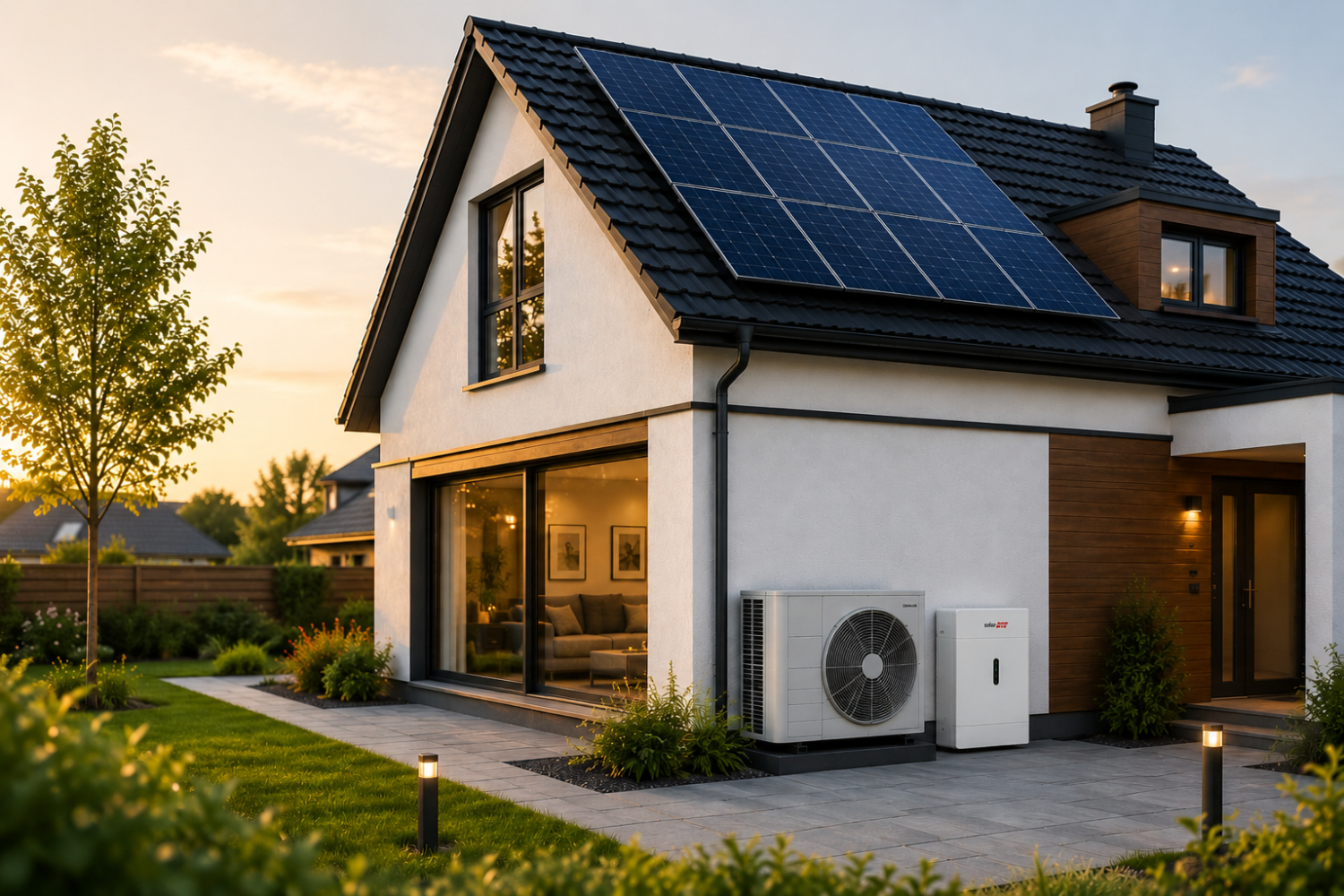
For most UK homes, the sensible order is to reduce wasted energy first, then generate electricity, then store it, then change the heating system when the property is ready. In plain English, that often means starting with insulation and draught proofing before moving on to solar panels, battery storage or a heat pump.
This guide explains how to think about the right order for your home, whether you are in Horley, Reigate, Redhill, Crawley or elsewhere in Surrey and West Sussex. It covers the practical pros and cons, what can go wrong, and when a professional survey is the right next step.
- Is there a right order for home energy upgrades?
- Why does insulation usually come first?
- When should you install solar panels?
- When does battery storage make sense?
- When is a heat pump the right next step?
- What if you have an electric vehicle?
- What if you run a small business from home?
- What approvals or paperwork are involved?
- What does installation involve?
- Common mistakes and how to avoid them
- Practical tips before you commit
- JPEC Green Energy can help
Is there a right order for home energy upgrades?
Yes, there is a sensible order, but there is not one perfect order for every property. The right approach depends on your building, your energy use, your budget and what you want to achieve.
A good basic principle is:
- Reduce heat loss first
- Generate your own electricity where suitable
- Store energy if it fits your usage
- Change the heating system when the home is ready
That means insulation often comes before a heat pump, solar panels often come before a battery, and a full survey should come before any major decision.
For example, an older home in Redhill may need insulation and heating checks before a heat pump makes sense. A newer home in Horley with a good roof and high daytime electricity use may be ready for solar panels sooner.
Why does insulation usually come first?
Insulation usually comes first because it reduces the amount of energy your home wastes. If your home loses heat quickly, every heating system has to work harder, whether you use a gas boiler, electric heating or a heat pump.
Insulation can include loft insulation, cavity wall insulation, solid wall insulation, floor insulation and draught proofing. The right option depends on the age and construction of your property.
This matters because a poorly insulated home can make other upgrades less effective. If you install a heat pump before dealing with major heat loss, you may need a larger system, bigger radiators, or higher running temperatures. That can reduce efficiency and increase costs.
Insulation is not always exciting, but it is often the foundation of a good home energy plan.
When should you install solar panels?
Solar panels are worth considering when your roof is suitable and you use enough electricity to benefit from them. They generate electricity from daylight, helping reduce the amount you buy from the grid.
Solar panels are not only for south-facing roofs. South-facing roofs are often strong performers, but east and west-facing roofs can also work well, especially if you use electricity in the morning or late afternoon.
The main things to check are roof space, roof condition, direction, pitch and shading. Shading from trees, chimneys or nearby buildings can reduce output. If your roof is likely to need repairs soon, it is better to deal with that before panels are fitted.
Solar can be a good early upgrade if:
- Your roof is in good condition
- There is limited shading
- You use electricity during the day
- You work from home
- You plan to add a battery, EV charger or heat pump later
- You want to reduce your reliance on grid electricity
For homes in Reigate, Crawley and across Surrey and West Sussex, solar panels can be a strong option, but only if the design is based on the roof and your actual electricity use.
JPEC Green Energy can survey your roof, estimate likely generation and explain whether solar is genuinely suitable for your property.
When does battery storage make sense?
Battery storage makes sense when you have electricity available at one time but want to use it later. In a home solar setup, that usually means storing spare solar electricity generated during the day so you can use it in the evening.
A battery is not automatically needed with every solar panel system. If you use plenty of electricity during the day, you may already use a large share of your solar power directly. In that case, a battery might still help, but the benefit may be smaller.
Battery size is important. Too small and it may not cover your evening use. Too large and you may pay for storage capacity you rarely use.
Battery storage may suit you if you are out during the day, use more power in the evening, have an electric vehicle, or use a smart tariff with cheaper overnight electricity. A smart tariff is an energy tariff where prices can vary by time of day.
Battery storage may be less suitable if your electricity use is low, your solar system is small, or your budget is better spent on insulation or solar panels first.
When is a heat pump the right next step?
A heat pump can be a good replacement for a fossil-fuel heating system, but it works best when the home is properly assessed and designed. It is not usually something to install without checking heat loss, radiators, hot water demand and insulation first.
An air source heat pump takes heat from the outside air and uses electricity to warm your home and hot water. It can work in cold weather, but it needs the right design.
Heat pumps work most efficiently at lower flow temperatures. Flow temperature means the temperature of the water being sent around your radiators or underfloor heating. Lower temperatures usually mean better efficiency, but your radiators must be large enough to heat the home properly.
A heat pump may be a good option if your home is reasonably well insulated, your heating system can be upgraded where needed, and you want to reduce reliance on gas, oil or LPG.
It may be less suitable as a first step if the home is very draughty, poorly insulated or has heating pipework and radiators that need major changes.
What if you have an electric vehicle?
If you have an electric vehicle, or plan to get one, your electricity use will change. That can affect whether solar panels, battery storage and a smart tariff make sense.
Most EV charging happens overnight because that is when the car is parked at home and electricity tariffs can be cheaper. Solar panels generate during the day, so they may not directly charge the car unless you are at home during daylight hours or can schedule daytime charging.
For example, a family in Horley with one car at home during the day may be able to use some solar power for charging. A household in Crawley where both cars are away all day may rely more on overnight charging.
An EV charger should be properly installed and may need checks on your electrical supply. Charger rating means how quickly the charger can deliver power to the vehicle. A typical home charger is often around 7kW, which means it can charge much faster than a normal plug socket, but your property must be suitable.
What if you run a small business from home?
A small business with daytime electricity use may benefit from solar panels sooner than a typical household. If you run equipment, lighting, computers, refrigeration, tools or office systems during the day, you may use more solar electricity as it is generated.
This can apply to small workshops, offices, clinics, studios and other premises in areas such as Redhill, Reigate and Crawley. The better your daytime match, the more useful solar generation may be.
Battery storage may still help, but it should be based on your load profile. A load profile simply means when and how much electricity you use during the day and night.
For small businesses, it is especially important to look at operating hours, roof space, electricity tariffs and future plans before choosing a system.
What approvals or paperwork are involved?
The paperwork depends on what you install. Solar panels, batteries, heat pumps and EV chargers all need proper design, safe installation and commissioning.
For solar panels and batteries, your installer may need to notify or apply to the local electricity network operator. This is often called DNO approval or DNO notification. DNO means Distribution Network Operator, which is the company responsible for the local electricity grid.
For solar exports, you may hear about the Smart Export Guarantee, or SEG. This is where eligible households can be paid for electricity they export back to the grid.
Heat pumps and EV chargers also need correct installation, electrical safety checks and proper handover documents. In some cases, planning rules, permitted development limits, landlord permission or freeholder approval may apply.
JPEC Green Energy can explain the paperwork in plain English and help make sure your system is designed, installed and commissioned correctly.
What does installation involve?
Installation depends on the technology. Insulation may involve loft access, wall cavities, internal works or external works. Solar panels usually require scaffolding, roof access and electrical work inside the property.
A battery normally needs a suitable location, often on a wall or floor in a garage, utility area or other approved space. It must be installed safely, with proper ventilation, protection and access.
A heat pump installation can be more involved. It may require an outdoor unit, pipework changes, a hot water cylinder, control upgrades and radiator changes. The amount of disruption depends on the existing heating system and how much preparation is needed.
Typical disruption is manageable when the job is planned properly, but it is still worth being realistic. Good installers should explain access, timescales, power interruptions, noise, mess and what will happen on each day.
Common mistakes and how to avoid them
The most common mistake is starting with the product instead of the property. A home energy upgrade should begin with a survey, your bills and your goals.
Other common mistakes include:
- Installing a heat pump before checking heat loss
- Adding a battery without looking at real electricity usage
- Putting solar panels on a roof that needs repair
- Ignoring shading
- Assuming every home needs the same order of upgrades
- Choosing the cheapest quote without checking design quality
- Forgetting aftercare, warranties and monitoring
- Expecting one technology to remove all energy bills
The way to avoid these problems is to get a proper design, not just a price. A good quote should explain why the system size, equipment and installation approach are suitable for your home.
Practical tips before you commit
Before spending money, gather the basic information an installer will need. This helps you get better advice and avoids guesswork.
Useful things to prepare include:
- Recent electricity and heating bills
- Your typical daytime and evening usage
- Whether you work from home
- Your roof direction and any obvious shading
- Your EPC rating, if you have one
- Your current heating system
- Any plans for an EV, heat pump or home battery
- Whether the roof or electrics need work
You do not need to know all the answers before speaking to an installer. But the more accurate the information, the more accurate the design and advice will be.
For many homes in Surrey and West Sussex, the best first step is a whole-property view. That means looking at insulation, roof suitability, heating, electricity use and future plans together, rather than making one isolated decision.
JPEC Green Energy can help
JPEC Green Energy are experienced local installers working with homeowners, landlords and small businesses across Horley, Reigate, Redhill, Crawley, Surrey and West Sussex. We can survey your property, design a suitable system, explain the trade-offs, install and commission the equipment, and advise on expected performance in plain English.
Whether you are considering insulation first, solar panels, battery storage, an EV charger or a heat pump, we can help you understand what order makes sense for your property and usage.
To arrange a survey, get design advice or request a proper quote based on your home or business premises, contact JPEC Green Energy.
This article is general information, not personal advice. Recommendations should always be confirmed through a proper survey and design based on your specific site, energy use, budget and needs.