Is My Roof Strong Enough and in Good Condition for Solar Panels?
In most UK homes, the roof is strong enough to support solar panels, but it still needs to be checked properly before installation. A typical solar panel system only adds a modest amount of weight, but the condition of the roof, the structure beneath it, and its age all matter.
If you live in places like Horley, Reigate, Redhill or Crawley, many homes are well suited to solar, but installers will still assess each roof carefully. This guide explains how to tell whether your roof is likely to be suitable and what professionals look for before installing panels.
In this guide, we will cover:
- How much weight solar panels add to a roof
- What types of roofs are usually suitable
- How roof condition affects solar installation
- How installers check structural strength
- When roof repairs or upgrades are needed
- Roof angle, direction and shading
- Planning rules and structural standards
- What installation actually involves
- Common problems that stop a roof being suitable
- Practical checks you can do before a survey
- What maintenance solar panels require
How much weight do solar panels add to your roof?
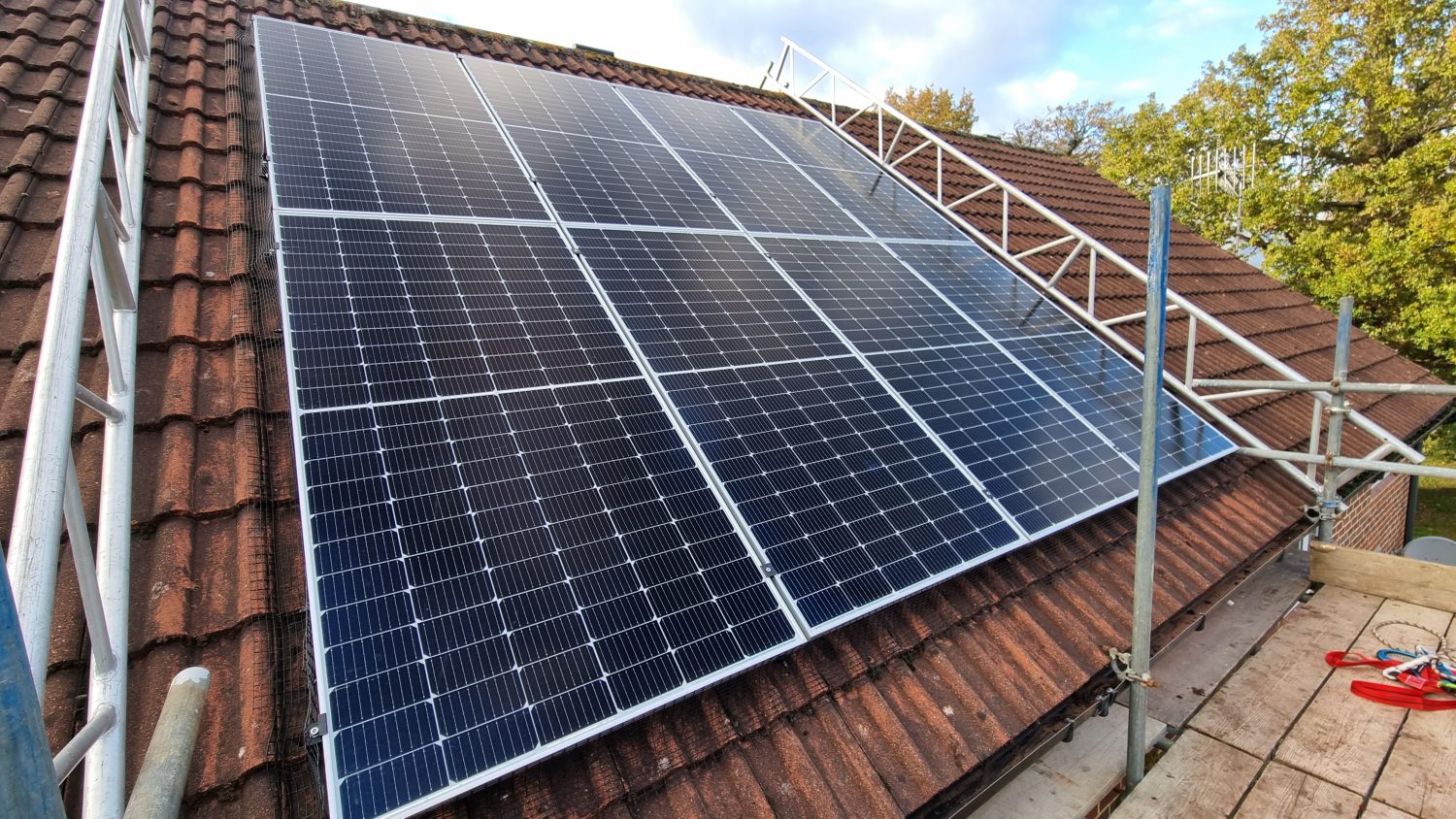
Solar panels are lighter than many people expect. A typical solar photovoltaic (PV) system adds roughly 15–20 kg per square metre to your roof.
For a typical UK home system of around 10–14 panels, the total additional weight is often around 200–300 kg spread across a large area.
To put that in perspective:
- Roofs are designed to carry snow loads, wind loads and roofing materials
- The weight of solar panels is often similar to or lighter than a second layer of tiles
- The weight is spread across the mounting rails and rafters rather than concentrated in one spot
Because of this, most structurally sound roofs in Surrey and West Sussex can support solar panels without reinforcement.
However, the key phrase is “structurally sound”. Age, damage or previous alterations can change that.
What types of roofs are usually suitable?
Most common UK roof types are compatible with solar panels.
Typical suitable roofs include:
- Pitched tile roofs (concrete or clay tiles)
- Slate roofs
- Metal sheet roofs
- Flat roofs with appropriate mounting frames
In areas like Reigate or Redhill, many homes built from the 1930s onwards have pitched tiled roofs that work well with standard solar mounting systems.
Flat roofs, common on extensions and commercial buildings around Crawley, can also work well because panels can be mounted at the ideal angle.
The main limitations tend to come from condition and structure, not roof type.
How does roof condition affect solar installation?
Your roof needs to be in good condition before panels are installed because solar systems typically last 25–30 years.
If your roof is nearing the end of its life, it may make sense to repair or replace it first.
Installers will look for issues such as:
- Broken or slipping tiles
- Damaged or rotting roof timbers
- Sagging areas of the roof
- Signs of water ingress
- Old felt or underlay failing
Installing panels on a roof that soon needs replacing can create extra cost later because the panels would need to be removed and refitted.
A good installer will flag this early. Companies like JPEC Green Energy, who work across Surrey and West Sussex, normally assess roof condition during the initial survey and explain if any preparation work is needed first.
How do installers check if your roof is strong enough?
A professional solar survey includes both visual inspection and structural assessment.
The installer typically checks:
- Rafter size and spacing inside the loft
- Roof structure condition
- Roof age and materials
- Weight distribution of the solar mounting system
In most homes, panels are mounted by fixing aluminium rails into the roof rafters using specialised brackets.
Because the brackets connect directly to the structural timber, the weight transfers safely into the building frame rather than sitting on the tiles.
If needed, installers can also carry out structural calculations to confirm the roof can handle the load.
JPEC Green Energy can help
If you are considering solar panels and want to know whether your roof is suitable, JPEC Green Energy can carry out a proper survey and explain the options clearly.
Their team works across Surrey and West Sussex, including Horley, Reigate, Redhill and Crawley, helping homeowners and small businesses understand what will work best for their property.
They can assess your roof structure, design an appropriate system, handle approvals, install the equipment and commission the system safely. Most importantly, they explain the trade-offs and expected performance in plain English so you can make an informed decision.
This article is intended as general information only. Solar suitability and structural requirements vary between properties, so any decisions should be based on a professional survey and system design specific to your building and energy use.